
The brown recluse spider is identified for its “reclusive” behaviors, because it would prefer to take residence in warm, dark and dry environments, such as basements, woodpiles and closets. This arachnid bites– generally unintentionally when it thinks it’s cornered– generally when a hand or foot reaches into a shoe or piece of clothes or in a container in the attic or basement where a brown recluse has created its home. The female spins an irregular web in undisturbed locations, like the attic, garage and basement. The web is not used to trap prey, but instead as a retreat.
Outside, brown recluse spiders are generally spotted around rocks, stacks of inner tubes, power boxes, woodpiles, under bark, etc
Inside the home, brown recluse spiders might be spotted in practically any undisturbed area. They are most frequently found in boxes, among documents, and in seldom-used clothes and shoes, although they can possibly be spotted in corners, below tables and chairs, or in crevices for instance, those located along baseboards, doors, and window moldings. Storage areas like closets, bedrooms, attics, crawl spaces, and basements are preferred nesting spaces.|Outside, brown recluse spiders are generally discovered around rocks, stacks of inner tubes, power boxes, woodpiles, under bark, etc
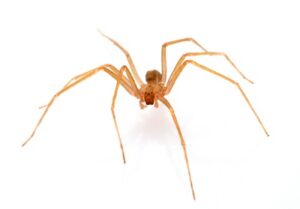
BROWN RECLUSE SPIDER BITES
Both male and female brown recluse spiders can bite and inject poison. Injection of their poison can generate necrosis or dead tissue, causing an ulcerating sore. Healing is extremely slow-moving and generally takes numerous weeks, causing dense scar tissue. In extreme cases, plastic surgery may be required.
The bite of a brown recluse spider is not typically felt, however it may produce an instant painful feeling followed by severe discomfort or this response may be postponed for 6 to 8 hours. A little blister generally appears and the bordering bite site becomes swollen. Signs include things like fever, restlessness and difficulty sleeping. The dead tissue at some point sloughs away throughout the following 10 to 14 days, leaving an open abscess and possibly exposing the underlying muscles and/or bone. Call a doctor or visit an emergency room right away if bitten, and when possible take the spider along for identification purposes.
CONTROL
1. Inspect the exterior of the home for any small openings or holes, paying special attention to locations where utility pipelines enter into the structure. Close any such openings with a silicone caulk to keep spiders and other insects from accessing inside.
2. Stack fire wood a minimum of twenty feet from your home and 5 inches up off of the ground to hinder spiders from hiding in the woodpile. It’s a great idea to wear gloves when moving the wood, and check it carefully prior to bringing inside your home.
3. Clothing and shoes need to not be left on the flooring, or they need to be shaken out prior to using, specifically if kept in the basement, garage, or other dark location.
4. Shop seldom-used items, such as boots, baseball mitts, skates, gardening clothing, and gloves, in securely sealed plastic bags or boxes.
Control of brown recluse spider invasions need to be delegated a certified pest-control specialist. Please call us at Bug Pro Pest Control if you believe to have a problem. We can help!
The brown recluse spider is known for its “reclusive” behaviors, because it prefers to take residence in warm, dark and dry environments, such as basements, woodpiles and closets. Outside, brown recluse spiders are generally found around rocks, stacks of inner tubes, energy boxes, woodpiles, under bark, etc.
Control of brown recluse spider invasions need to be left to a certified pest-control professional.
